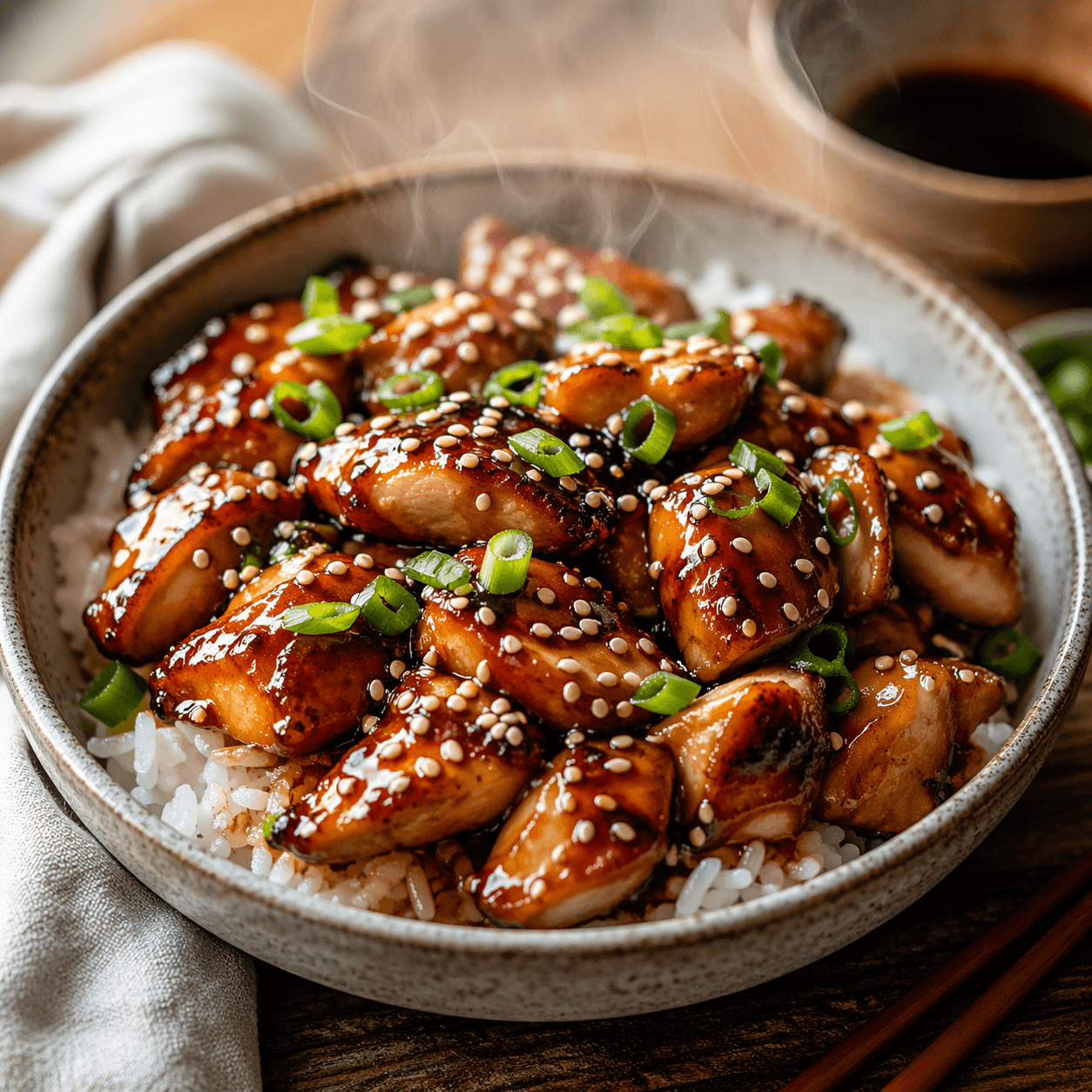
Easy Teriyaki Chicken Recipe
If you’re looking for a dependable, high-impact dinner that delivers on flavor without requiring complicated techniques, this easy teriyaki chicken is a strong candidate. It’s fast, cost-efficient, and uses pantry staples to produce a glossy, balanced sauce that rivals most takeout versions.
This recipe is particularly effective for weeknight cooking because it minimizes prep while still achieving depth: sweet, salty, slightly tangy, and umami-rich. It also adapts well—pan, air fryer, or even meal prep batches.
Why This Recipe Works
Teriyaki is fundamentally about reduction and balance. The core flavor structure combines:
- Salt (soy sauce)
- Sweetness (honey or sugar)
- Acidity (vinegar)
- Aromatics (garlic + ginger)
Many quick recipes fail because they either dilute the sauce or skip the thickening step. This version avoids both issues by using a controlled simmer and a cornstarch slurry to create that signature glaze.
Ingredients
- Serves: 3–4
- Total Time: ~25 minutes
Optimized for Flavor Balance
- 500 g boneless chicken thighs (preferred) or breasts
- 2 tbsp soy sauce
- 2 tbsp honey or brown sugar
- 1 tbsp rice vinegar (or apple cider vinegar)
- 1 tbsp mirin (optional but recommended)
- 2 cloves garlic, minced
- 1 tsp fresh ginger, grated (or ½ tsp ground)
- 1 tbsp cornstarch + 2 tbsp water
- 1 tbsp oil
Optional:
- Sesame seeds
- Spring onions
Step-by-Step Method
1. Prepare the Sauce
In a bowl, combine soy sauce, honey, vinegar, mirin, garlic, and ginger. Mix until the sugar dissolves. This ensures even flavor distribution when it hits the pan.
2. Cook the Chicken
Heat oil over medium-high heat. Add chicken pieces in a single layer.
Important detail: do not overcrowd. Proper spacing allows caramelization, which contributes significantly to flavor.
Cook for 6–8 minutes, turning occasionally, until golden and fully cooked.
3. Add the Sauce
Pour the sauce directly into the pan. It should start bubbling within seconds. Reduce heat slightly and let it simmer for 2–3 minutes.
At this stage, the sauce begins reducing and intensifying.
4. Thicken the Sauce
Stir the cornstarch slurry, then add it to the pan. Stir continuously.
Within 1–2 minutes, the sauce will become:
- Glossy
- Slightly sticky
- Thick enough to coat the chicken
5. Finish and Serve
Remove from heat. Garnish if desired.
Air Fryer Version (Cleaner, Less Oil)
1. Preheat air fryer to 200°C
2. Cook chicken for 10–12 minutes (shake halfway)
3. Prepare sauce separately in a pan
4. Thicken with slurry, then toss chicken in sauce
This method produces slightly crisp edges with less oil, though it sacrifices some pan caramelization.
What Makes Teriyaki Sauce Authentic?
Traditional teriyaki in Japanese cuisine is simpler than most Western adaptations. It typically uses:
- Soy sauce
- Sugar
- Mirin
Garlic and ginger are modern additions that enhance complexity for home cooking. This recipe leans slightly Western for accessibility while maintaining structural authenticity.
Ingredient Substitutions
No mirin?
Use 1 tbsp water + ½ tsp sugar.
No fresh ginger?
Ground ginger works, but reduce quantity to avoid bitterness.
Low-sodium option:
Use reduced-sodium soy sauce and add 1–2 tbsp water.
No cornstarch?
Arrowroot or flour slurry works, though texture may differ slightly.
Serving Ideas (Content-Friendly Variations)
This recipe fits easily into multiple content formats:
1. Teriyaki Chicken Bowl
- Rice base
- Chicken
- Avocado, cucumber, carrots
2. Teriyaki Wrap
- Flatbread or tortilla
- Chicken + slaw + mayo
3. Noodle Stir-Fry
- Toss chicken with cooked noodles and vegetables
4. Meal Prep Boxes
- Rice + chicken + broccoli
- Keeps well for 3–4 days refrigerated
Storage and Reheating
- Fridge: Up to 4 days (airtight container)
- Freezer: Up to 2 months (sauce may slightly separate)
- Reheat: Pan with a splash of water to loosen sauce
Microwave works, but stovetop reheating preserves texture better.
Common Mistakes to Avoid
1. Overcrowding the pan
Results in steaming instead of browning.
2. Adding slurry too early
Prevents proper reduction and flavor concentration.
3. Over-thickening
Sauce should coat, not clump.
4. Using only chicken breast without care
Breasts dry out faster; reduce cooking time accordingly.
Cost Efficiency
This recipe performs well on a budget. Chicken thighs are typically cheaper than breasts, sauce uses pantry staples and scales easily for bulk cooking
Estimated cost per serving is relatively low compared to takeout, making it viable for weekly rotation.